

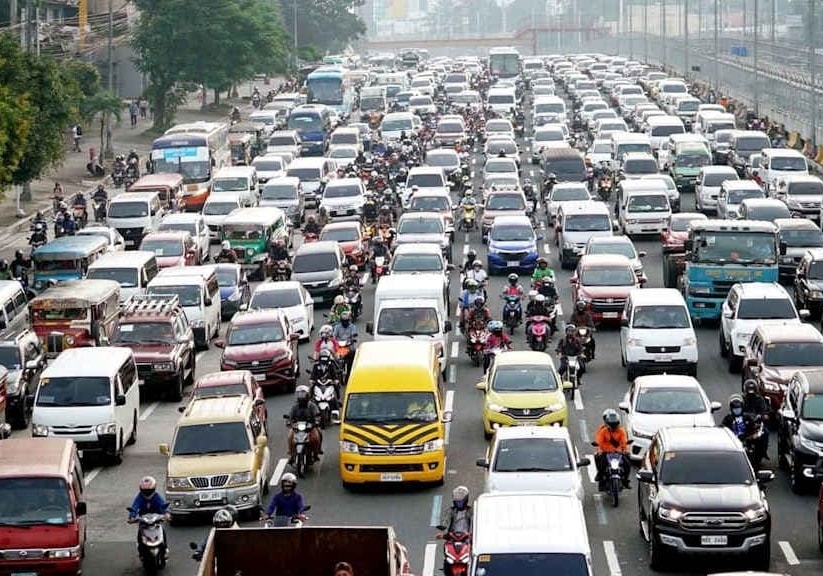
Unveiling the Crisis of Urban Congestion and Mobility
The urban landscape of major cities, notably Metro Manila, has succumbed to the stranglehold of incessant vehicular traffic. A crisis that transcends inconvenience, this escalating issue has cast its shadow over commuters, drivers, corporations, and government agencies alike. A sobering revelation from a 2018 Japan International Cooperation Agency (JICA) study projected that Metro Manila's daily traffic congestion extracts a staggering economic toll of 3.5 billion pesos, projected to swell to a colossal 5.4 billion pesos by 2035.
Economic Strain and Transit Paralysis: Navigating the Urban Abyss
The unrelenting gridlock has precipitated a multifaceted crisis, compounded by a public transport system that teeters on the brink of collapse. The question arises: How did we reach this point of no return, and who shoulders the blame?
A dissection of this quagmire lays bare a system burdened by systemic flaws, exacerbated by an undue focus on urban centers. The root cause of this chaos traces back to a dearth of nationwide perspective. It is an injustice to solely target the Metro Manila Development Authority (MMDA) for a problem that demands the orchestrated involvement of the entire government machinery.
The Nexus of Urban Woes: An Exploration of Root Causes
Two pivotal factors fuel the engine of traffic congestion: burgeoning population density and the relentless surge in vehicle numbers, coupled with an unyielding road network. The trajectory is clear: an influx of migrants seeking urban livelihoods strains resources, while the constant influx of vehicles overwhelms existing infrastructure.
The urban exodus from rural heartlands stems from the allure of brighter economic prospects. This tide of migration, propelled by mounting challenges in agrarian domains, has propelled for decades. In response to this crisis, diverse strategies emerge among individuals. Some amongst the affluent opt for suburban dwellings, while others resign themselves to navigating an inept public transit system. These divergent approaches inadvertently contribute to the burgeoning traffic nightmare, as private vehicles exacerbate congestion.
Urban Masses: A Daytime Phenomenon
The gravity of the issue becomes palpable when we consider the daylight transition in urban centers. The daytime population swells from a modest 13 million to a staggering 15 million in Metro Manila, as revealed by the World Population Review. The strain inflicted on infrastructure and services during daylight hours reflects the magnitude of the challenge.
This surge is not merely statistical; it represents a culmination of individual struggles to secure their livelihoods in a congested metropolis. This surge also underscores the city's role as an economic hub, a magnet for commerce and enterprise.
Economic Symbiosis and Population Flux
A profound symbiotic relationship exists between urbanization and economic growth. Emerging business prospects and expansive consumer markets drive rural-to-urban migration. The burgeoning real estate sector fuels demand for labor, fuelling further waves of migration. Supply chains, woven intricately with industry, amplify these urban dynamics.
But migration isn't solely a matter of choice; it is also influenced by displacement caused by natural calamities and conflicts. Villages ravaged by armed confrontations lay desolate, compelling residents to seek refuge in urban havens. This juxtaposition between push and pull factors continues to shape the urban panorama.
Revolutionizing Solutions: Proposing Reverse Migration
The enduring resolution to the traffic crisis necessitates a paradigm shift: reverse migration. A holistic approach driven by local economic stimulation is a pivotal step towards unraveling this web of congestion. The private sector, although not the harbinger of this transformation, is poised to seize the initiative when signs of prosperity manifest.
In light of the complexity surrounding the shift to a federal governance model, revisiting the 60-40 revenue sharing arrangement between national and local governments becomes pivotal. Senate President Tito Sotto's recommendation to relocate government offices to peripheral regions offers an appealing prospect. However, the selection of host locations warrants reconsideration.
Host Cities: Catalysts for Change
Proposing provincial governments as potential hosts for this dispersal program lends weight to the strategy. An innovative approach that factors in an LGU's migration rate, average income, and population density amplifies chances of success in securing hosting privileges. Financial mechanisms like direct loans, bond issuance, or national government subsidies could propel these cities towards becoming hosts.
The benefits for hosting LGUs are manifold. Envision Batanes housing the Senate and Jolo accommodating the House of Representatives. These locales would inevitably flourish, with government offices acting as magnets for associated developments. The ripples of change extend beyond politics to the commercial landscape, with property developers and educational institutions gravitating towards these epicenters.
Catalyzing Transformation: Rethinking Government Office Placement
A further dimension of transformation involves ranking government offices, influenced by levels of corruption. Those tainted by corruption should be swiftly transitioned to impoverished LGUs, an approach that not only holds offices accountable but also fosters equitable development across regions.
In the labyrinthine journey of untangling urban congestion, a powerful undercurrent surges—shifting the fulcrum of economic activity. The proposed reverse migration strategy heralds a fresh dawn, reimagining urban landscapes and diminishing the chokehold of traffic. As the nation
-------
This rewritten article was first published on 10 September 2019 with the title "Traffic, Imagined from Afar."


No comments:
Post a Comment